
Deep Analysis: Principles and Safety Logic of Automotive Braking Systems
10 Apr 2026
Technical Deep Dive: Mastery of Electronically Controlled Diesel Engines and Braking Systems
Part 1: The Three Pillars of Modern Diesel Injection Technology
While many industry veterans still use the colloquial term "Electric Injection," the technically precise terminology is Electronically Controlled Diesel Engine. The transition from mechanical to electronic control has revolutionized combustion efficiency. To manage a high-performance fleet, one must distinguish between these three dominant injection architectures:
1. High-Pressure Common Rail (HPCR) – The Industry Standard
The HPCR system is the most prevalent technology in the current Chinese heavy-duty truck market.
Operational Logic: It utilizes a closed-loop system comprised of a high-pressure pump, sensors, and an ECU. Unlike older systems, the generation of injection pressure is decoupled from the injection timing.
The Benefit: By maintaining a constant high pressure in the "rail," the ECU ensures that fuel is atomized perfectly and injected at the millisecond-exact moment. This results in superior thermal efficiency, lower noise, and compliance with stringent emission standards.
2. Unit Injector System (UIS) – The Integrated Powerhouse
Often referred to as the "Pump-Nozzle" system, this was a hallmark of high-end European engineering.
Operational Logic: It integrates the fuel pump, control unit, and nozzle into a single physical module mounted on the cylinder head. There are no high-pressure fuel lines, and the unit is driven directly by the camshaft.
The Benefit: The absence of fuel lines eliminates pressure wave interference and fuel compression issues, allowing for extremely high injection pressures that are easily regulated by electromagnetic valves.
3. Unit Pump System (UPS) – The Modular Relative
The Unit Pump is a close relative of the UIS but offers a distinct structural advantage.
Operational Logic: While it follows the "one pump per cylinder" rule, the pump and nozzle are separate entities connected by a short high-pressure pipe.
The Benefit: This modular design allows for easier engine block layout and maintenance, as each unit can be serviced independently without disturbing the entire injection head.
Part 2: The Anatomy of Safety – Understanding Your Braking System
A truck’s ability to stop is the only thing standing between a successful delivery and a catastrophic failure. A braking system is a complex symphony of mechanical, hydraulic, and electronic components.
I. The Force Origin: Master Cylinder
The Master Cylinder features a reservoir for brake fluid and a piston-driven cylinder. When the pedal is depressed, the piston forces pressurized hydraulic fluid through the lines to each wheel's slave cylinder, initiating the braking force.
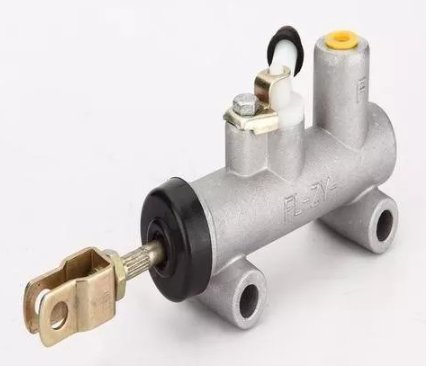
II. The Force Multiplier: Vacuum Booster
Standard leg strength is insufficient to stop a 40-ton truck. The Vacuum Booster utilizes engine-generated vacuum to create a pressure differential. This amplifies the physical input from the driver’s leg, allowing for effortless yet powerful deceleration.
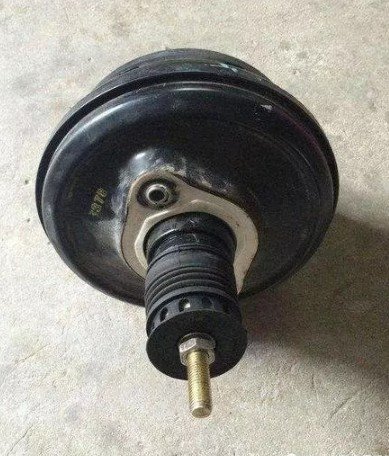
III. The Guardian: ABS Pump (Anti-lock Braking System)
ABS is the pinnacle of braking safety. By monitoring wheel speeds via high-sensitivity sensors, the system detects an impending wheel lock. The ABS pump then pulses the pressure—locking and releasing thousands of times per minute—to keep the vehicle steerable and prevent skidding or jackknifing.

IV. The Execution: Calipers, Discs, and Pads
The final stage of braking is purely frictional. The hydraulic pressure forces the piston in the slave cylinder to move, squeezing the Brake Pads against the rotating Brake Disc. This conversion of kinetic energy into thermal energy is what brings the vehicle to a halt.

V. The Final Link: Tires and Traction
Regardless of how powerful your brakes are, they are limited by the tire’s grip. Specialized tread designs—such as asymmetric patterns for drainage—drastically reduce braking distances on wet African roads.

Why Quality Parts Matter in Global Logistics
In the volatile environment of 2026, where Mideast supply chains are strained and lead times are extending, settling for "cheap" parts is a high-risk gamble. Whether it is a Common Rail Injector or an ABS Pressure Regulator, only OEM-standard parts can guarantee that your electronic systems function as intended.
William Du | Your Specialist in Heavy-Duty Truck Exports
Precision Parts for HOWO, SHACMAN, and BEIBEN
WhatsApp/WeChat: +86 19050562894
Email: Sales22@chinatruck.cc


